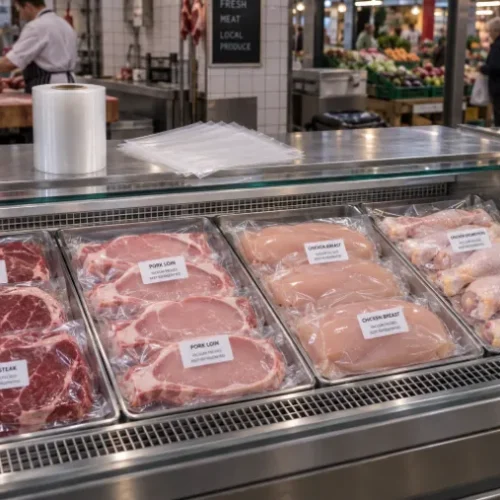
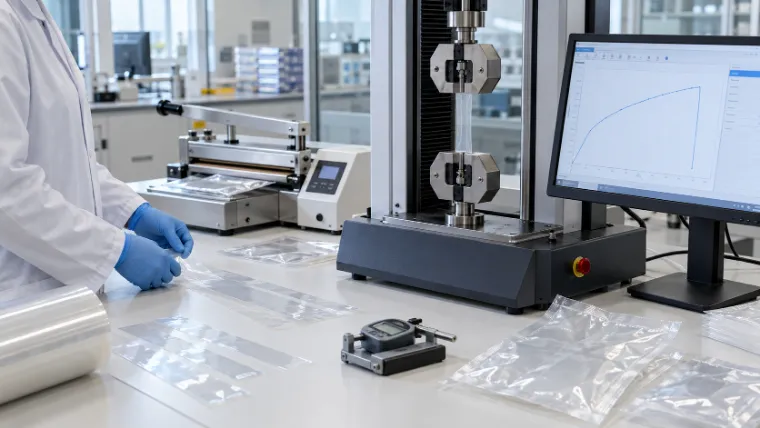
Most packaging questions start the same way: which film, which bag? The honest answer is that it depends on three things – the food, the process it goes through and the machine that packs it. This guide walks through the building blocks we discuss with buyers every day, so your first conversation with a supplier is shorter and more precise.
Start with the Food and the Process
Before talking about materials, look at what the product needs protection from. Oxygen changes the colour of fresh meat and makes fats go rancid. Moisture loss dries out cheese and baked goods. Bones, shells and frozen edges can puncture a weak film. Grease and sauces test the seal.
Then follow the pack through its life. Will it be chilled, frozen or kept at room temperature? Is it pasteurised, cooked or sterilised after sealing? Will the end user heat it in the pack? Each answer rules some structures in and others out – long before price comes into the discussion.
- What the food is, and whether it has bones, sharp edges or liquid
- Storage conditions: chilled, frozen or ambient
- Heat treatment: none, pasteurisation, cooking or retort sterilisation
- The packaging machine and pack format you use today
- How the pack needs to look on the shelf
What Each Layer Does
Flexible packaging is rarely a single material. Most food films combine several layers, each doing one job. They are joined either by co-extrusion, where the layers are melted and formed together, or by lamination, where separate films are bonded with dry or solvent-free lamination.
PE – the sealing layer
Polyethylene forms the inside of most bags and films. It seals at comparatively low temperatures, gives a tight, reliable seal and is a good moisture barrier. The type and thickness of the PE layer largely decide how the pack behaves on the sealing bar.
PA – strength and puncture resistance
Polyamide (nylon) adds toughness, puncture resistance and formability. This is why PA/PE is the classic structure for vacuum bags and for the bottom web of thermoformed packs, where the film is stretched into a cavity.
EVOH and PVDC – the oxygen barrier
For oxygen-sensitive products, a barrier layer of EVOH or PVDC is added. EVOH is usually buried between other layers because it is sensitive to moisture; PVDC keeps its barrier in humid conditions and is often found in shrink bags. How much barrier you need depends on the product and the shelf life you target – more is not automatically better.
PP – when heat is involved
Polypropylene withstands higher temperatures than PE, so PA-PP structures are used where packs are pasteurised, cooked or sterilised – our retort grades are designed for 121 °C. Not every structure suits every heating process, so the actual time and temperature always need to be confirmed.
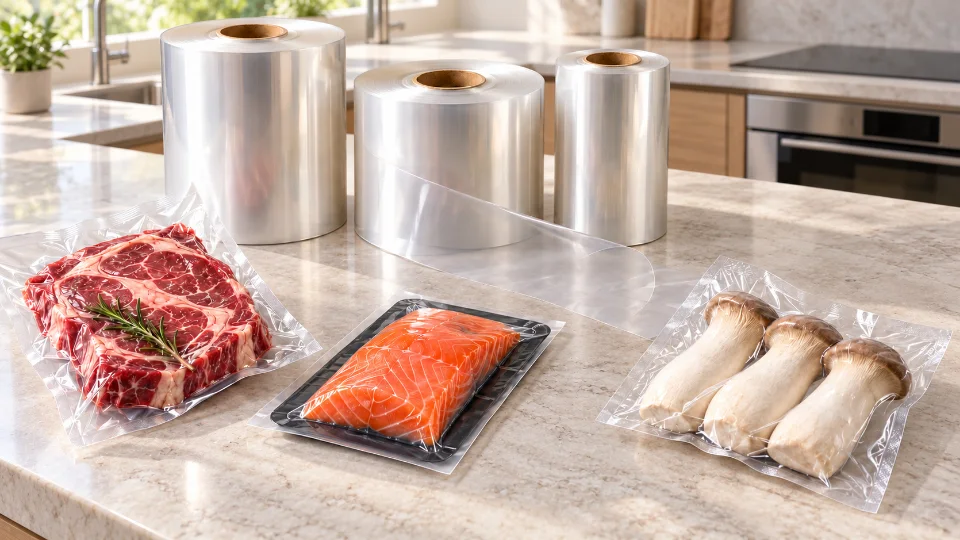
The right structure is the simplest one that protects your food through your actual process – not the one with the most layers.
Choosing the Format
Once the structure is roughly clear, the format mostly follows the way you pack:
- Vacuum bags – pre-made PA/PE or high-barrier bags for chamber machines; embossed bags and rolls for external (suction) vacuum sealers.
- Heat shrink bags – shrink tightly around fresh meat or cheese for a close, clean look and less free film.
- Composite bags – laminated and printed 3-side seal, stand-up, zipper or spout pouches for frozen food, ready meals and dry products.
- Rollstock – thermoforming film (bottom and top web), VSP film, and film for automatic flow-wrap or form-fill-seal machines.
Why the Machine Has the Final Word
The same structure can behave differently on two lines. Sealing temperature window, dwell time, forming depth, film width, core size and, for printed film, the unwind direction all matter. A film that seals perfectly on one machine may need a different sealant layer on another.
That is why we treat every material recommendation as a first proposal. It is confirmed with samples tested on your own machine before production starts – and adjusted if the trial shows it should be.
What to Send for a Recommendation
You do not need a finished specification to start. Tell us what you pack, how it is stored and heated, which machine you use, the bag or film size, the thickness if you know it (our range is typically 70–180 µm), any printing (gravure or flexo, 3 to 11 colours) and your estimated quantity. “Not sure” is a perfectly good answer – filling those gaps is our job. Send us your requirements.